
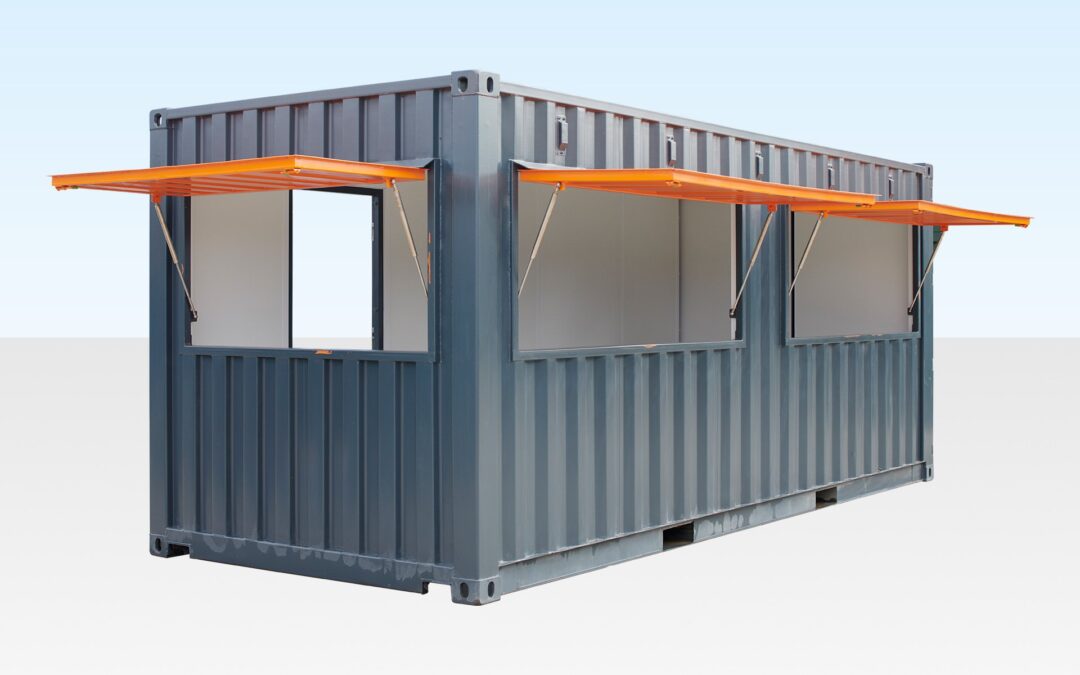
In most U.S. locations, you should expect to obtain several shipping container cafe permits before placing the unit, connecting utilities or serving customers.
There is no single nationwide permit that approves every aspect of a container café. Your project may require zoning or land-use approval, a building or placement permit, health-department plan review, food-establishment approval, electrical and plumbing permits, fire inspection, sign approval, a business license and final authorization to open.
The exact requirements depend on:
- The city, county and state
- The proposed property
- How long the container will remain onsite
- Whether permanent utilities will be connected
- Whether customers enter the unit
- The food and drinks being served
- Whether food is prepared or cooked inside
- The equipment being installed
- Whether outdoor seating is provided
The U.S. Small Business Administration explains that licensing and permit requirements vary according to business activity, location and applicable government rules.
The safest approach is to investigate your property and permit path before purchasing equipment or scheduling container delivery.
General information only: This guide provides a U.S.-focused planning overview and is not legal, architectural, engineering or code-compliance advice. Your local authorities determine which approvals apply to your project.
Table of Contents
- Why there is no universal container café permit
- Zoning and land-use approval
- Property-owner approval
- Building or placement permits
- Food-establishment approval
- Health-department plan review
- Electrical permits
- Plumbing permits
- Mechanical and ventilation permits
- Fire-department approval
- Accessibility requirements
- Sign and outdoor-seating permits
- Business licenses and tax registrations
- Final inspections and occupancy approval
- Recommended permit sequence
- Documents you may need
- Common permit mistakes
- Permit-planning checklist
Why Is There No Single Nationwide Container Cafe Permit?
A converted shipping container may be classified differently from one jurisdiction to another.
Depending on the project, the local authority might review it as:
- A commercial building
- A modular or prefabricated structure
- A permanent food establishment
- A temporary commercial structure
- A kiosk
- A concession unit
- A relocatable commercial facility
How the café is classified can depend on whether it has a foundation, how long it will remain onsite, how it connects to utilities, whether customers enter it and what type of food preparation occurs inside.
The International Building Code includes provisions addressing intermodal shipping containers repurposed for use as buildings or structures. Those model-code provisions can address matters such as structural design, foundations and alterations to key container components. However, a model code is not automatically the enforceable rule everywhere; the code and amendments adopted by the local jurisdiction control the project.
The product name or the fact that a container is relocatable does not determine its legal classification.
Your local building official, planning department and health authority decide how the proposed site, structure and food-service operation will be reviewed.
Separate the Property Approval From the Business Approval
Container café projects normally involve two connected approval paths.
Approval for the property and structure
This may include:
- Zoning
- Land use
- Building or placement permit
- Foundation approval
- Structural review
- Electrical work
- Plumbing work
- Mechanical systems
- Fire access
- Accessibility
- Exterior signs
Approval for the food business
This may include:
- Business registration
- Local business license
- Food-establishment permit
- Health-department plan review
- Food-safety inspection
- Food-manager certification
- Employee food-handler requirements
- Sales-tax registration
- Final operating authorization
Approval of the physical container does not automatically authorize food sales.
Similarly, receiving a business license does not necessarily authorize the container to be placed on a particular property.
Both parts of the project must be reviewed together.
1. Zoning and Land-Use Approval
Zoning should be one of the first issues you investigate.
A property may be physically large enough for a container café but not legally approved for the proposed use.
The planning or zoning department may determine:
- Whether food service is allowed
- Whether a converted shipping container is permitted
- Whether the use is permanent or temporary
- Whether conditional-use approval is required
- Required distances from property lines
- Required parking
- Permitted operating hours
- Whether outdoor seating is allowed
- Whether drive-through service is allowed
- Sign restrictions
- Waste-storage requirements
- Customer and delivery access
- Design-review requirements
Questions to ask include:
- Is a café allowed in this zoning district?
- Are converted shipping containers allowed as commercial structures?
- Is a temporary-use or conditional-use permit required?
- What setbacks apply?
- How much parking is required?
- Can customers queue outside?
- Is outdoor seating allowed?
- Can the service hatch face the street?
- Are landscaping or screening improvements required?
- Are there limitations on operating hours?
Do not sign a long-term land agreement solely because the owner says a food business is allowed.
Request confirmation from the authority responsible for zoning and land use.
2. Property-Owner or Landlord Approval
Government approval does not replace written permission from the property owner.
A lease or site-use agreement should address:
- Exact container position
- Permitted business use
- Lease duration
- Delivery and crane access
- Responsibility for the foundation
- Electrical, water and sewer costs
- Exterior paint and branding
- Outdoor seating
- Waste collection
- Property insurance
- Maintenance responsibilities
- Ownership of site improvements
- Removal or relocation at the end of the agreement
- Restoration of the property
The agreement should also specify whether the café owner may:
- Install utility trenches
- Construct a concrete pad
- Add decking
- Install signs
- Add a canopy
- Build an accessible walkway
- Place tables and customer barriers
Do not invest in site work, equipment or delivery based only on a verbal promise.
3. Building or Placement Permit
A building or placement permit may be required before the container is delivered or installed.
The building department may review:
- Container condition
- Foundation or supporting system
- Structural alterations
- Serving-hatch opening
- Personnel-door opening
- Structural reinforcement
- Wind resistance
- Seismic requirements
- Anchoring
- Roof loads
- Fire separation
- Interior finishes
- Means of egress
- Occupancy classification
- Accessibility
- Location on the property
The International Building Code includes specific provisions for intermodal shipping containers used as buildings or structures. For example, its provisions address structural design and limitations involving major container components. The edition and local amendments enforced for your property must be confirmed with the building department.
The department may request documents such as:
- Property site plan
- Container floor plan
- Exterior elevations
- Foundation plan
- Structural details
- Door and hatch reinforcement details
- Container identification information
- Electrical plan
- Plumbing plan
- Mechanical plan
- Equipment schedule
- Engineer-stamped drawings
A container that was previously converted does not automatically satisfy the codes adopted at your proposed site.
Should you buy the container before building approval?
It is often safer to confirm the project concept, property use and submission requirements first.
You can review the 20ft shipping container café for sale while planning, but the buyer remains responsible for confirming that the unit and proposed fit-out can be approved at the selected site.
4. Food-Establishment Permit
A business selling prepared food or beverages will commonly need approval from the agency responsible for retail food service.
Depending on the state and location, that authority may be a:
- City health department
- County health department
- State health department
- Environmental-health department
- Department of agriculture
- Other designated regulatory agency
The FDA publishes a state-by-state directory showing that retail-food regulations and responsible agencies vary across the United States.
The reviewing agency may ask about:
- Proposed menu
- Food-preparation methods
- Coffee and beverage processes
- Equipment
- Refrigeration
- Hot and cold holding
- Ingredient storage
- Water source
- Wastewater disposal
- Handwashing
- Warewashing
- Cleaning procedures
- Pest prevention
- Waste management
- Employee food-safety practices
A coffee-and-pastry kiosk may follow a different review path from a café cooking meats, frying food or preparing a large menu onsite.
Finalize your intended menu before asking the health department to review the café.
5. Health-Department Plan Review
Many jurisdictions require food-establishment plans to be approved before construction, plumbing or equipment installation begins.
A plan-review package may include:
- Menu
- Scaled floor plan
- Equipment schedule
- Appliance specification sheets
- Sink arrangement
- Plumbing layout
- Water-heater details
- Water-filtration system
- Refrigeration
- Food-storage plan
- Interior finish schedule
- Lighting
- Ventilation
- Wastewater plan
- Cleaning facilities
- Customer-service process
The FDA Food Code is a model containing food-safety recommendations for retail and food-service establishments. State and local authorities decide which requirements are adopted and enforced in their jurisdictions.
This means you should submit the actual proposed café—not a generic container drawing.
The plan should show:
- Your exact equipment
- Exact sink locations
- Exact counter layout
- Water and drainage
- Storage
- Employee movement
- Food-preparation areas
- Customer service points
Before developing the submission, review:
- What Equipment Do You Need for a 20ft Container Cafe?
- 20ft Container Cafe Layout Ideas for Coffee, Food and Desserts
These guides can help you define the equipment and workflow, but your final plan must satisfy the reviewing authority.
6. Electrical Permit
Electrical permits or inspections may apply when installing or connecting:
- Main electrical service
- Breaker panel
- Dedicated appliance circuits
- Higher-voltage outlets
- Refrigerators and freezers
- Espresso machines
- Water heater
- HVAC
- Exterior lighting
- Illuminated signs
- Generator connection
- Grounding
- Required protective devices
The Clad Containers café shell includes an electrical installation, but buyers should confirm:
- Available voltage
- Main service capacity
- Panel rating
- Number of circuits
- Existing outlet types
- Outlet positions
- Compatibility with selected equipment
An existing installation may still require inspection, modification or local approval before it can be connected and used at the new property.
Prepare a full appliance schedule before the electrician completes the final plan.
For each item, record:
- Voltage
- Amperage
- Wattage
- Circuit requirement
- Plug or connection type
- Operating location
Do not assume that an installed outlet can support any commercial appliance that physically fits beside it.
7. Plumbing Permit
Plumbing approval may apply to:
- Potable-water connection
- Sewer connection
- Handwashing sink
- Food-preparation sink
- Warewashing sink
- Service or cleaning sink
- Water heater
- Water filtration
- Wastewater tank
- Fresh-water tank
- Grease-management equipment
- Drainage
- Backflow prevention
The health authority may determine which fixtures are necessary for the menu, while the building or plumbing authority determines how those fixtures must be installed.
Do not install sinks first and ask for approval afterward.
The required arrangement may depend on:
- Whether food is prepared
- Whether reusable utensils are washed onsite
- The appliances being used
- The number of employees
- The water source
- The wastewater system
- The local food code
The plumbing plan should be coordinated with the equipment and floor plan so that pipes do not interfere with doors, cabinets, appliances or employee movement.
8. Mechanical and Ventilation Permit
Mechanical approval may apply to:
- Heating and air conditioning
- Exhaust fans
- Fresh-air systems
- Cooking hoods
- Ductwork
- Make-up air
- Refrigeration systems
- Condensate drainage
A coffee-focused café may have different ventilation requirements from a business using:
- Fryers
- Grills
- Ovens
- Grease-producing appliances
- Smoke-producing equipment
- High-heat cooking systems
Adding hot-food preparation can change:
- Equipment requirements
- Electrical demand
- Mechanical design
- Fire review
- Suppression requirements
- Permit cost
- Available interior space
Decide whether you are building a coffee kiosk, cold-food café or hot-food operation before finalizing the mechanical plan.
9. Fire-Department Approval
The fire marshal or fire-prevention office may review:
- Cooking equipment
- Commercial hood
- Fire-suppression system
- Fire extinguishers
- Propane or gas
- Emergency exits
- Exit signs
- Interior finishes
- Electrical equipment
- Customer queue
- Fire-lane access
- Distance from nearby buildings
- Outdoor seating
- Canopies
The correct fire-protection system depends on the appliances, fuels, occupancy and property.
Do not purchase a particular extinguisher or suppression system based solely on a general online checklist.
Ask the local fire authority which requirements apply to your menu and equipment before installation.
10. Accessibility Requirements
Restaurants and other businesses serving the public are covered by Title III of the Americans with Disabilities Act. Accessibility can affect both the café and the surrounding customer area.
Potential considerations include:
- Accessible route from parking or a public sidewalk
- Surface conditions and slope
- Ramps where needed
- Clear customer pathways
- Service-counter access
- Queue arrangement
- Pickup area
- Outdoor seating
- Restrooms where provided
- Communication access
- Business policies and procedures
Accessibility is not limited to whether a customer can enter the container.
Many container cafés use walk-up service, which means the accessible route, ordering position, payment process, pickup counter and customer seating may be especially important.
The final design should be reviewed by the local building official and, where appropriate, a qualified architect, accessibility specialist or contractor.
11. Sign Permit
A separate permit or design approval may apply to:
- Illuminated business signs
- Container-mounted signs
- Exterior menu boards
- Freestanding signs
- Digital displays
- Directional signs
- Awning signs
- Temporary promotional signs
Sign regulations may control:
- Maximum area
- Height
- Position
- Brightness
- Lighting hours
- Distance from the roadway
- Historic-district appearance
- Electrical connections
- Number of signs
Do not order an expensive exterior sign until the permitted size, location and illumination have been confirmed.
12. Outdoor Seating and Patio Approval
The permit for the container may not approve the entire customer area.
Separate review may apply to:
- Decking
- Tables
- Benches
- Canopy
- Ramps
- Queue barriers
- Exterior lighting
- Customer fencing
- Parking changes
- Alcohol service
- Outdoor music
- Occupant capacity
Outdoor seating can also affect:
- Restroom requirements
- Accessible routes
- Parking requirements
- Setbacks
- Fire access
- Drainage
- Property capacity
Show all planned customer improvements on the site plan rather than presenting the container alone.
13. Business License and Tax Registrations
The physical permit process is separate from registering and licensing the business.
Depending on the business and location, possible requirements include:
- Business entity registration
- Employer identification number
- Local business license
- Assumed-name registration
- State tax registration
- Sales-tax permit
- Employer accounts
- Food-manager certification
- Food-handler training
- Required insurance
The SBA notes that the licenses, permits and fees a business needs depend on its activity, location and applicable rules.
A health-department permit may not replace a city business license.
A building permit may not replace sales-tax registration.
Keep a checklist for each agency involved rather than assuming that one approval covers the entire business.
14. Certificate of Occupancy and Final Inspections
Before opening, you may need final inspections or a certificate confirming that the completed café can be used for the approved purpose.
Final approval may involve separate inspections by:
- Building department
- Electrical inspector
- Plumbing inspector
- Mechanical inspector
- Fire department
- Health department
- Zoning department
- Accessibility reviewer
Inspectors may verify:
- Work matches approved plans
- Equipment is installed correctly
- Utilities operate safely
- Required sinks are present
- Refrigeration works
- Ventilation is complete
- Fire equipment is installed
- Customer access is complete
- Approved signs and seating match the plans
Do not assume you may open because construction is finished.
Ask each reviewing department:
- Which final inspection is required?
- Who schedules it?
- What must be operational?
- Which documents must be onsite?
- Which permits or certificates must be displayed?
In What Order Should You Apply for Container Cafe Permits?
A coordinated sequence can prevent expensive design changes.
Step 1: Define the Business Concept
Decide:
- What you will sell
- How food will be prepared
- Whether cooking occurs onsite
- Number of employees
- Ordering process
- Customer seating
- Proposed hours
Step 2: Identify a Potential Property
Review:
- Site size
- Access
- Utilities
- Parking
- Delivery route
- Customer traffic
- Neighboring uses
Do not sign a long-term agreement before checking the proposed use.
Step 3: Speak With Planning and Zoning
Ask whether:
- A café is allowed
- The container structure is permitted
- Conditional-use approval is needed
- Setbacks and parking requirements can be met
Step 4: Contact the Food-Service Authority
Ask about:
- Plan review
- Menu submission
- Equipment certification
- Required sinks
- Water and wastewater
- Inspection process
Step 5: Consult the Building Department
Confirm:
- Structural submission requirements
- Foundation requirements
- Adopted building code
- Accessibility
- Occupancy classification
- Required professional drawings
Step 6: Prepare Coordinated Plans
The site, container, equipment, plumbing, electrical system, ventilation and customer area should agree with one another.
Step 7: Submit Permit Applications
Follow the sequence required by the local agencies.
Some departments may not review the project until another approval has been issued.
Step 8: Complete Only Approved Work
Do not casually change:
- Menu
- Equipment
- Sink layout
- Serving windows
- Cooking method
- Foundation
- Seating
A major change may require revised plans.
Step 9: Schedule Final Inspections
Make sure all required equipment and utilities are operational before the appointments.
Step 10: Receive Authorization to Open
Begin serving customers only after all required operating approvals have been received.
Documents You May Need
Permit applications may request some or all of the following:
- Business description
- Proposed menu
- Property address
- Lease or owner authorization
- Site plan
- Container floor plan
- Exterior elevations
- Foundation plan
- Structural calculations
- Container identification
- Serving-hatch details
- Personnel-door details
- Equipment schedule
- Appliance specification sheets
- Electrical plan
- Plumbing plan
- Mechanical plan
- Water-supply details
- Wastewater details
- Interior finish schedule
- Lighting information
- Accessibility information
- Sign drawings
- Outdoor-seating plan
- Fire-protection information
- Delivery and placement plan
Not every jurisdiction will request every document.
Ask each department for its application checklist before paying professionals to prepare the submission.
Does the Clad Containers Cafe Come With Permits?
No. Clad Containers supplies the physical converted café shell. Site-specific permits, operating licenses and final approvals remain the buyer’s responsibility unless a written agreement explicitly states otherwise.
The current unit includes:
- A 20ft converted shipping container
- Serving hatch
- Personnel access door
- Electrical installation
- Insulation
- Finished interior
It is sold as a ready-to-fit shell.
The buyer chooses and installs the:
- Counters
- Sinks
- Plumbing
- Refrigeration
- Coffee equipment
- Cooking equipment
- HVAC
- Ventilation
- Branding
- Final layout
Those decisions affect the approval process. A café serving coffee and packaged pastries may be reviewed differently from one preparing hot meals.
The property also affects:
- Zoning
- Foundation
- Parking
- Accessibility
- Utility connections
- Fire access
- Outdoor seating
- Delivery
After confirming that the proposed site and café concept can be approved, you can review the 20ft container café and request current specifications, availability and delivery information.
Shipping Container Cafe Permit Mistakes to Avoid
Buying before checking zoning
A well-converted café may still be prohibited on the selected property.
Assuming “relocatable” means permit-free
A structure can be movable and still require zoning, placement, utility and business approvals.
Finalizing the layout before the menu
The menu affects equipment, sinks, refrigeration, ventilation and fire review.
Buying appliances before plan approval
The reviewing authority may require different equipment, clearances or utility connections.
Treating the café as a food truck
A semi-permanent container may follow different requirements from a licensed mobile food unit.
Ignoring the customer area
Walkways, counters, seating, parking, signs and queues may require review.
Scheduling delivery before site approval
The container may arrive before its location, foundation or use has been approved.
Making changes during construction
Adding cooking equipment or another serving window can affect previously approved plans.
Assuming the supplier obtains permits
The seller cannot provide one universal permit for every property, menu and jurisdiction.
Opening before the final inspection
Construction completion does not necessarily authorize public operation.
Shipping Container Cafe Permit Checklist
Define the business
- Finalize the menu.
- List food-preparation methods.
- Decide whether hot food will be cooked.
- Estimate peak staffing.
- Choose the service model.
- Decide whether seating will be provided.
- List all equipment.
Evaluate the property
- Obtain owner approval.
- Confirm food service is allowed.
- Confirm shipping-container structures are allowed.
- Check setbacks.
- Check parking.
- Confirm customer access.
- Confirm delivery access.
- Identify utility connections.
- Check outdoor seating and sign rules.
Prepare plans
- Site plan
- Container floor plan
- Equipment plan
- Foundation plan
- Electrical plan
- Plumbing plan
- Mechanical plan
- Customer-access plan
- Sign plan
- Outdoor-seating plan
Confirm possible approvals
- Zoning or land-use approval
- Building or placement permit
- Health-department plan review
- Food-establishment permit
- Electrical permit
- Plumbing permit
- Mechanical permit
- Fire inspection
- Sign permit
- Patio or seating approval
- Business license
- Tax registration
- Certificate of occupancy
- Final operating approval
Confirm the Approval Path Before Scheduling Delivery
The most important question is not:
Does the container already have a permit?
The better question is:
Can this café design, menu and property be approved together in my jurisdiction?
Before ordering equipment or scheduling delivery:
- Define the menu.
- Confirm the property use.
- Speak with planning and zoning.
- Contact the health department.
- Confirm building requirements.
- Prepare coordinated plans.
- Apply for the required permits.
- Complete the approved work.
- Schedule final inspections.
- Receive authorization to open.
Once your proposed site and business plan have been reviewed, view the 20ft shipping container café and contact Clad Containers to confirm availability, specifications, delivery requirements and offloading options.
Frequently Asked Questions
Do I need a building permit for a shipping container cafe?
A building or placement permit may be required when a converted container is installed as a commercial structure. The local building department determines how the unit is classified and which structural, foundation, utility, accessibility and occupancy requirements apply.
Can I place a container cafe on private property?
Private ownership does not automatically authorize commercial food service or a container structure. The property must comply with zoning, land-use, setback, parking, utility and other applicable requirements.
Do I need health-department approval to sell coffee?
Coffee and beverage businesses commonly require retail-food or food-establishment approval. Requirements depend on what is served, how ingredients are handled and which local agency regulates retail food service.
Does a coffee-only container need fewer permits than a restaurant?
It may have fewer equipment, ventilation or fire-protection requirements than a hot-food restaurant, but zoning, business, building, health, electrical, plumbing and accessibility approvals may still apply.
Do I need a permit if the container is temporary?
Possibly. Temporary and relocatable structures can still require land-use, placement, health, fire and operating permits. Ask the local departments how they define the proposed duration and use.
Can I obtain permits after the cafe is delivered?
Some approvals may need to be obtained before delivery, foundation construction or utility work. Placing the unit first can create costly problems if the site or structure is later rejected.
Do I need an engineer for a container cafe?
An engineer may be required for the foundation, structural alterations, anchoring, wind or seismic design, or other site-specific issues. The local building department will determine the required professional documentation.
Does a container cafe need a certificate of occupancy?
A certificate of occupancy or similar final authorization may be required before the café opens. The requirement depends on how the structure and business are classified locally.
Do I need permits for outdoor seating?
Outdoor seating, decking, canopies, ramps, barriers and lighting may require separate review. Seating can also affect parking, restroom, accessibility and occupant-capacity requirements.
Does Clad Containers obtain the permits?
No. Site-specific permits and operating approvals are the buyer’s responsibility unless a written agreement specifically includes additional services. Clad Containers supplies the converted café shell and delivery options.
How long does the permit process take?
There is no universal timeframe. Timing depends on the jurisdiction, project complexity, application completeness, agency workload, public hearings and requested revisions. Ask each local department for its current review schedule.
Which department should I contact first?
Begin with the local planning or zoning department to determine whether the proposed café and container structure are allowed on the property. Then contact the food-service regulator and building department before finalizing plans.