The total shipping container cafe cost includes much more than the price of the converted container itself.
You must account for delivery, offloading, site preparation, permits, utility connections, counters, sinks, plumbing, commercial equipment, refrigeration, climate control, branding and opening inventory.
A compact coffee kiosk with a focused drink menu will generally require a smaller investment than a café preparing hot food. The final cost depends on what you plan to sell, where the container will be placed, which utilities are already available and how much equipment you intend to install.
A useful way to estimate the project is:
Total project cost = café shell + delivery + site preparation + approvals + utilities + fixtures + equipment + branding + opening expenses + contingency
For planning purposes, a basic coffee-only project could be modeled at approximately $30,000 to $45,000, while a more extensively equipped café may require $50,000 to $80,000 or more. A hot-food operation requiring cooking equipment, extraction and fire suppression can exceed $100,000.
These figures are planning examples—not Clad Containers quotations or guaranteed project costs. Your actual budget will depend on the location, contractors, local regulations, equipment choices and site conditions.
Table of Contents
- What the Clad Containers café price includes
- The total project-cost formula
- Café shell and structural changes
- Delivery and offloading
- Site preparation
- Permits and professional services
- Electrical work
- Plumbing and water systems
- Counters and interior fixtures
- Coffee equipment
- Refrigeration and ice equipment
- HVAC and ventilation
- POS, technology and security
- Branding and signs
- Opening inventory and cash reserves
- Example container café budgets
- Hidden costs
- Ways to control the budget
What Does the Clad Containers Cafe Price Include?
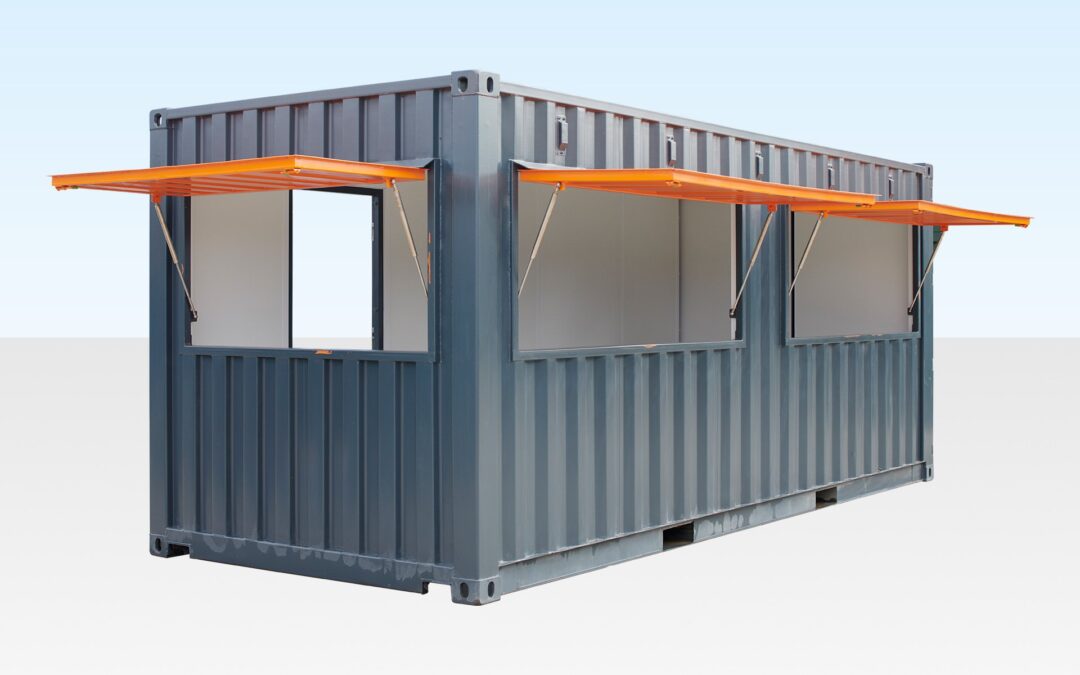
The Clad Containers 20ft shipping container café for sale is currently listed at $7,500. It is sold as a ready-to-fit café shell rather than an immediately operational commercial kitchen.
The current unit includes:
- A 20ft repurposed steel shipping container
- Large serving hatch
- Separate personnel access door
- Installed electrical system
- Insulated interior
- Finished internal workspace
- Marine-grade plywood floor
- Lockable steel structure
- Custom ventilation
- CSC certification
The container gives you a professionally converted physical starting point for the business.
It does not automatically include:
- Espresso machine
- Coffee grinders
- Refrigerators or freezers
- Ice machine
- Food-preparation counters
- Cabinets and shelving
- Sinks and faucets
- Plumbing
- Fresh-water or wastewater tanks
- Water heater
- HVAC system
- Extraction hood
- Fire-suppression system
- Point-of-sale equipment
- Signs and branding
- Furniture
- Delivery and offloading
Unless an item appears in your written order or quotation, budget for it separately.
The café-shell price should therefore be viewed as the first part of the project—not the total amount required to open the business.
The Shipping Container Cafe Cost Formula
Use the following formula when building your budget:
Container shell + delivery + site preparation + permits + utilities + fixtures + equipment + branding + opening costs + contingency
Each category should have its own estimate and supplier quotation.
Separating the expenses helps you see which costs are essential before opening and which upgrades can be added later.
It also prevents a common budgeting mistake: spending most of the available funds on the container and equipment while forgetting permits, utility connections, delivery, insurance or working capital.
The U.S. Small Business Administration recommends identifying startup expenses and organizing them into one-time and recurring monthly costs. Common expenses include equipment, utilities, permits, insurance, inventory, employee wages, marketing and professional services.
1. Container Cafe Shell and Structural Changes
The current Clad Containers café shell costs $7,500, subject to availability and future price changes.
Because the serving hatch, personnel door, electrical system, insulation and interior finish have already been added, you can begin with a more advanced structure than an unmodified shipping container.
However, your business plan may require additional structural work, such as:
- Second serving window
- Larger serving hatch
- Customer-ordering window
- Additional personnel door
- Equipment access opening
- Exterior awning
- Canopy supports
- HVAC opening
- Plumbing penetrations
- Exhaust opening
- Custom exterior paint
- Interior partition
- Additional ventilation
- Exterior service shelf
Every structural change can affect the budget, production schedule and final layout.
Finalize the menu, equipment list and customer-service process before requesting additional windows or doors. Moving an opening after counters, equipment or utilities have been installed is usually more complicated than deciding its position during the planning stage.
2. Delivery and Offloading Costs
Delivery costs depend on where the container is located, the delivery ZIP code, site access and offloading method.
Possible delivery methods include:
- Tilt-bed delivery
- Flatbed transportation
- Crane-assisted placement
- Forklift offloading where suitable equipment is available
Factors that can affect the delivery price include:
- Distance from the container yard
- Fuel and carrier charges
- Road access
- Gate width
- Turning space
- Ground conditions
- Crane requirements
- Placement difficulty
- Waiting time
- Local transportation restrictions
- Failed delivery attempts
Clad Containers offers nationwide delivery and crane-offloading options, with pricing based on the destination and site requirements.
To receive a more accurate quotation, provide:
- Delivery ZIP code
- Site address
- Photographs of the property
- Road and gate measurements
- Overhead-clearance information
- Ground-condition details
- Desired container orientation
- Distance between the road and placement point
- Preferred offloading method
Prepare the site before the delivery vehicle arrives. A second visit, additional crane time or later repositioning can create avoidable expenses.
3. Site Preparation and Foundation
Your placement area must be firm, level and capable of supporting the loaded container.
Site-preparation costs can include:
- Vegetation removal
- Land clearing
- Grading
- Soil compaction
- Gravel installation
- Concrete pad
- Concrete piers
- Foundation blocks
- Drainage improvements
- Utility trenching
- Parking
- Customer walkway
- Accessible route
- Outdoor seating area
- Exterior lighting
- Landscaping
A simple compacted-gravel placement area may require less work than an engineered concrete foundation with water, sewer and electrical connections.
Before creating the site budget, ask:
- Is the property level?
- Is it prone to flooding?
- Can a delivery truck reach the placement point?
- Are electricity, water and sewer already nearby?
- Does the municipality require engineered plans?
- Will customers need a paved or accessible route?
- Is additional parking required?
- Will an outdoor seating area be built?
- Is drainage work necessary?
Do not choose a foundation only because it is the least expensive option. The correct support method depends on the soil, local regulations, container use and site conditions.
4. Permits, Plans and Professional Services
Permit expenses vary significantly by location and project type.
Your project may require:
- Business registration
- Local business license
- Zoning approval
- Land-use approval
- Building or placement permit
- Food-establishment permit
- Health-department plan review
- Electrical permit
- Plumbing permit
- Fire inspection
- Sign permit
- Certificate of occupancy
- Accessibility review
- Food-manager certification
- Employee food-handler permits
You may also need assistance from:
- Architect
- Structural engineer
- Drafting professional
- Licensed electrician
- Licensed plumber
- General contractor
- Food-service consultant
- Equipment supplier
- Fire-suppression contractor
License and permit requirements depend on the business activity and location, so another café’s permit cost may not apply to your project. The SBA recommends checking the requirements of the government agencies responsible for your specific location and business activity.
Contact the local planning, building, health and fire departments before completing the final design.
A local authority may request changes to the layout, sinks, customer-access route, equipment, ventilation, foundation or utility plan. Discovering those requirements early can help prevent expensive revisions.
5. Electrical Completion and Upgrades
Although the Clad Containers café shell includes an electrical installation, you must confirm its exact capacity before purchasing appliances.
Commercial café equipment may require:
- Additional outlets
- Dedicated circuits
- Higher-voltage circuits
- Breaker-panel upgrade
- GFCI protection
- Exterior outlets
- Sign wiring
- HVAC circuit
- Water-heater circuit
- Utility-company connection
- Generator connection
- Electrical inspection
Create an electrical load schedule for every proposed appliance.
| Equipment | Voltage | Amperage | Dedicated circuit |
|---|---|---|---|
| Espresso machine | Confirm model | Confirm model | Often required |
| Coffee grinder | Confirm model | Confirm model | Check model |
| Refrigerator | Confirm model | Confirm model | Check locally |
| Ice machine | Confirm model | Confirm model | Check locally |
| Water heater | Confirm model | Confirm model | Often required |
| HVAC system | Confirm model | Confirm model | Often required |
| Blender | Confirm model | Confirm model | Check model |
| Exterior sign | Confirm model | Confirm model | Check locally |
Do not purchase appliances based only on their dimensions and price. Confirm their electrical specifications as well.
A licensed electrician should compare the complete equipment schedule with the café shell’s panel, circuits and available utility service.
6. Plumbing and Water-System Costs
Plumbing costs depend heavily on whether municipal water and sewer connections are already available near the placement area.
Possible plumbing expenses include:
- Dedicated handwashing sink
- Food-preparation sink
- Multi-compartment warewashing sink
- Faucets and sprayers
- Water heater
- Water filtration
- Potable-water lines
- Drain lines
- Municipal sewer connection
- Fresh-water tank
- Wastewater tank
- Water pump
- Grease-management equipment
- Backflow-prevention equipment
- Plumbing labor
- Inspection fees
A sink’s purchase price represents only part of the cost.
You must also consider:
- Faucets
- Drain fittings
- Hot-water supply
- Pipework
- Wall penetrations
- Wastewater handling
- Installation labor
- Inspection
- Required clearances
A coffee-only kiosk connected to existing utilities may have a simpler plumbing plan than a remote café relying on fresh-water and wastewater tanks.
Ask the local health department which sinks and water systems are required for your menu before buying fixtures.
7. Counters, Cabinets and Interior Fixtures
A 20ft container requires efficient use of every available area.
Interior-fit-out expenses may include:
- Espresso counter
- Food-preparation counter
- Customer service counter
- Pickup shelf
- Stainless-steel worktables
- Base cabinets
- Wall-mounted shelves
- Dry-storage racks
- Cup dispensers
- Ingredient storage
- Cleaning-supply cabinet
- Employee storage
- Waste-bin enclosure
- Anti-slip floor finish
Standard commercial fixtures may cost less than fully custom cabinetry. However, custom fixtures can make better use of a compact workspace.
Cost is influenced by:
- Materials
- Dimensions
- Number of cabinets
- Stainless-steel fabrication
- Equipment cutouts
- Sink integration
- Installation labor
- Food-safe finishing
- Delivery charges
Make sure fixtures do not block:
- Electrical panel
- Utility shutoffs
- Equipment access panels
- Personnel door
- Serving hatch
- Fire equipment
- Plumbing connections
Good storage is important, but employee movement and service speed should remain the priority.
8. Coffee and Beverage Equipment
Coffee equipment can represent one of the largest portions of the fit-out budget.
A typical equipment list may include:
- Commercial espresso machine
- Primary espresso grinder
- Secondary or decaffeinated grinder
- Batch coffee brewer
- Hot-water dispenser
- Water-filtration system
- Commercial blender
- Digital scales
- Tampers
- Milk pitchers
- Knock box
- Cleaning tools
- Cup and lid dispensers
- Ingredient containers
The espresso machine should be selected according to:
- Expected order volume
- Number of employees
- Available counter space
- Electrical capacity
- Water requirements
- Warranty
- Local repair support
- Replacement-part availability
A small café does not always need the largest available machine. Purchasing equipment that significantly exceeds the expected demand can increase the initial cost, electrical requirements, heat output and maintenance expenses.
A lower-priced machine can also become expensive if it is unreliable or difficult to repair.
Balance purchase price with commercial suitability, service support and anticipated workload.
9. Refrigeration and Ice Equipment
Depending on the menu, you may need:
- Undercounter milk refrigerator
- Upright refrigerator
- Display refrigerator
- Sandwich-preparation refrigerator
- Freezer
- Ice machine
- Ice-storage bin
- Refrigerated ingredient station
Undercounter refrigeration can help save space by placing cold storage below the primary work surface.
Budget for more than the equipment price. Additional expenses may include:
- Freight
- Delivery
- Installation
- Water connection
- Drain connection
- Replacement filters
- Ventilation clearance
- Equipment maintenance
- Energy use
An ice machine may need potable water, filtration, drainage and sufficient airflow around the condenser.
Avoid placing refrigeration so tightly against walls or counters that it cannot release heat or be serviced.
10. HVAC, Ventilation and Fire Protection
A steel container can become uncomfortable without effective heating and cooling.
Heat can be generated by:
- Direct sunlight
- Employees
- Espresso machine
- Refrigerator
- Freezer
- Ice machine
- Water heater
- Lighting
- Cooking equipment
Possible climate-control expenses include:
- Mini-split HVAC unit
- Professional HVAC installation
- Electrical circuit
- Condensate drain
- Exhaust fan
- Fresh-air intake
- Ventilation ducts
- Wall penetrations
- Thermostat
A coffee-only operation may require a simpler system than a café preparing hot food.
Cooking equipment can introduce additional expenses such as:
- Commercial extraction hood
- Ductwork
- Make-up-air system
- Fire-suppression system
- Fire inspection
- Additional electrical or gas service
- Grease-management system
This is one reason the menu must be finalized before estimating the completed shipping container café cost.
11. POS, Technology and Security
Technology expenses may include:
- POS terminal
- Card reader
- Receipt printer
- Cash drawer
- Order display
- Kitchen display screen
- Wi-Fi router
- Internet installation
- Security cameras
- Alarm system
- Exterior lighting
- Digital menu board
- Online-ordering software
Separate one-time hardware expenses from recurring costs such as:
- POS subscription
- Internet service
- Payment-processing fees
- Online-ordering fees
- Cloud storage
- Security monitoring
A low initial hardware price does not always mean a low long-term cost. Review subscription and transaction charges before choosing a system.
12. Exterior Paint, Signs and Branding
A container café needs to be visible and easy for customers to understand.
Branding expenses may include:
- Exterior repainting
- Logo design
- Vinyl graphics
- Illuminated sign
- Menu boards
- Service-window graphics
- Exterior lighting
- Awning
- Canopy
- Outdoor furniture
- Planters
- Branded cups
- Packaging
- Staff uniforms
Branding can be completed in stages.
Prioritize items that customers need to use the business:
- Business name
- Menu
- Prices
- Ordering point
- Pickup point
- Operating hours
- Exterior lighting
Decorative upgrades can be added after the essential operational and compliance work is complete.
13. Opening Inventory and Operating Reserves
The project budget should not end when construction is finished.
You will also need money for:
- Coffee beans
- Milk
- Tea
- Syrups
- Pastries or food
- Cups and lids
- Napkins
- Cleaning products
- Employee wages
- Insurance
- Utility deposits
- Marketing
- Waste collection
- Pest control
- Equipment maintenance
- Replacement parts
- Emergency expenses
These costs are separate from building and equipping the café.
Maintain an operating reserve so the business can pay expenses during the opening period. Do not assume that sales will immediately cover every monthly cost.
Separate your budget into:
One-time startup expenses
- Container
- Delivery
- Site preparation
- Permits
- Equipment
- Utility installation
- Counters
- Signs
Recurring monthly expenses
- Ingredients
- Payroll
- Insurance
- Utilities
- Software subscriptions
- Internet
- Waste collection
- Marketing
- Equipment maintenance
This gives you a more accurate picture of how much funding the business needs.
Example Shipping Container Cafe Budgets
The following scenarios are illustrative planning models. They are not quotations and do not represent guaranteed minimum or maximum costs.
Scenario 1: Lean Coffee-Only Kiosk
This example assumes:
- Espresso and brewed coffee
- Tea
- Prepackaged pastries
- One or two employees
- Limited refrigeration
- No onsite cooking
- Existing utility access
- Basic branding
| Cost category | Example allowance |
| Café shell | $7,500 |
| Delivery and offloading | $2,500 |
| Site preparation | $2,000 |
| Permits and plans | $1,500 |
| Electrical completion | $2,500 |
| Plumbing and sinks | $3,500 |
| Counters and storage | $2,500 |
| Coffee equipment | $7,500 |
| Refrigeration | $1,500 |
| HVAC | $1,500 |
| POS and security | $1,000 |
| Signs and branding | $1,000 |
| Opening inventory | $750 |
| Contingency | $1,500 |
| Example total | $35,250 |
This model assumes a focused menu and relatively uncomplicated site.
Scenario 2: Standard Professional Container Cafe
This example assumes:
- Espresso and brewed coffee
- Smoothies or cold beverages
- Pastries and cold food
- Two or three employees
- Ice machine
- Display refrigeration
- Custom counters
- Stronger exterior branding
| Cost category | Example allowance |
| Café shell | $7,500 |
| Delivery and offloading | $3,500 |
| Site preparation | $4,000 |
| Permits and plans | $3,000 |
| Electrical completion | $4,500 |
| Plumbing and sinks | $6,000 |
| Counters and storage | $5,000 |
| Coffee equipment | $12,000 |
| Refrigeration and ice | $5,000 |
| HVAC and ventilation | $3,000 |
| POS and security | $2,000 |
| Signs and branding | $3,500 |
| Opening inventory | $1,500 |
| Contingency | $4,500 |
| Example total | $64,500 |
The completed total could be lower or higher depending on the equipment brands, site and local requirements.
Scenario 3: Cafe With Hot-Food Preparation
This example assumes:
- Coffee and cold drinks
- Hot-food preparation
- Larger refrigeration capacity
- Expanded plumbing
- Extraction
- Fire suppression
- More extensive professional plans
- Additional electrical capacity
| Cost category | Example allowance |
| Café shell | $7,500 |
| Delivery and offloading | $4,000 |
| Site preparation | $7,500 |
| Permits and professional plans | $7,500 |
| Electrical work | $8,000 |
| Plumbing and sinks | $9,000 |
| Counters and interior fixtures | $8,000 |
| Coffee equipment | $14,000 |
| Cooking equipment | $15,000 |
| Refrigeration and ice | $8,000 |
| HVAC, extraction and fire protection | $15,000 |
| POS and security | $2,500 |
| Signs and branding | $4,000 |
| Opening inventory | $2,500 |
| Contingency | $8,000 |
| Example total | $120,500 |
Hot-food projects can become substantially more expensive when the menu requires specialized ventilation, fire protection or utility upgrades.
Hidden Shipping Container Cafe Costs Buyers Often Miss
Some expenses are easy to overlook during early planning.
Equipment shipping and installation
The advertised appliance price may not include freight, unloading, assembly, connection or commissioning.
Sales tax
Tax may apply to the container, equipment, materials or services depending on the transaction and location.
Utility-company connection fees
The property may have electricity, water or sewer nearby without having a suitable active connection at the placement point.
Trenching
Running power, water and drainage lines across the property may require excavation and surface repairs.
Crane waiting time
Poor site preparation or blocked access can extend the offloading process.
Permit revisions
Authorities may request changes to submitted plans before approval.
Engineer-stamped documents
Some jurisdictions or properties may require professional drawings and calculations.
Replacement filters and cartridges
Water-filtration and ice-machine systems may have recurring maintenance costs.
Employee training
Employees may need food-safety training, equipment training or manufacturer instruction.
Software subscriptions
POS, online ordering, payroll, scheduling and security systems may charge monthly fees.
Waste collection and pest control
Food-service operations need reliable waste-management and sanitation plans.
Insurance deposits
The business may need general liability, property, product liability, workers’ compensation or other coverage.
Working capital
The business must continue paying wages, ingredients, utilities and other expenses after opening.
How to Reduce the Cost of Finishing a Container Cafe
A lower project cost should come from better planning—not from ignoring essential requirements.
Finalize the menu first
Do not purchase equipment or approve a floor plan until you know what the café will sell.
Start with a focused menu
A smaller menu can reduce equipment, refrigeration, storage and preparation requirements.
Confirm permits early
Find out what the local authorities require before installing sinks, counters or appliances.
Match equipment to realistic demand
Do not purchase the largest available appliance unless your projected order volume requires it.
Plan plumbing and electrical work together
Coordinating utility work can help prevent repeated wall, floor or trench modifications.
Avoid late layout changes
Moving sinks, windows, counters and outlets after installation increases labor and material costs.
Compare contractor quotations
Request detailed written estimates that separate labor, materials, permits and exclusions.
Consider reputable refurbished equipment
Used commercial equipment may reduce the initial cost, but check its condition, certification, warranty, service history and replacement-part availability.
Complete essential work before decorative upgrades
Prioritize permits, utilities, equipment, sanitation and customer safety before investing heavily in decorative elements.
Prepare the delivery site in advance
Confirm access, placement direction, ground stability and offloading requirements before the container arrives.
Maintain a contingency allowance
Unexpected expenses can occur even with careful planning. Keep part of the project budget uncommitted until the work is complete.
Shipping Container Cafe Cost Worksheet
Use this table to compare early estimates with actual supplier quotations.
| Cost category | Initial estimate | Supplier quote | Final cost |
| Café shell | $7,500 | ||
| Additional modifications | |||
| Delivery and offloading | |||
| Site preparation | |||
| Permits and plans | |||
| Electrical work | |||
| Plumbing and water system | |||
| Counters and storage | |||
| Coffee equipment | |||
| Cooking equipment | |||
| Refrigeration and ice | |||
| HVAC and ventilation | |||
| Fire protection | |||
| POS and security | |||
| Signs and branding | |||
| Opening inventory | |||
| Insurance and deposits | |||
| Contingency | |||
| Total |
Update the worksheet whenever you receive a quotation or make a design change.
Is a Container Cafe Cheaper Than a Traditional Coffee Shop?
A container café can reduce or avoid some expenses associated with constructing a conventional permanent building. It may also provide a compact, recognizable structure that can be installed more quickly once approvals and site work are complete.
However, it is not automatically inexpensive.
You still need to budget for:
- Land or site use
- Permits
- Utility connections
- Equipment
- Interior fixtures
- Delivery
- Customer access
- Insurance
- Inventory
- Operating expenses
The better comparison is not simply container versus building.
Compare the complete cost of each available business model, including:
- Container café
- Food truck
- Leased retail space
- Drive-through kiosk
- Pop-up stand
- Traditional construction
Consider the opening cost, monthly expenses, customer capacity, location flexibility and long-term business goals.
Build Your Budget Around the Ready-to-Fit Cafe Shell
The real shipping container cafe cost depends on the type of business you plan to build.
A coffee-only kiosk can use a focused equipment package and relatively simple workflow. A café serving hot food may require significantly more plumbing, electrical capacity, refrigeration, ventilation and fire protection.
Begin with the container shell, then create separate estimates for:
- Delivery
- Site preparation
- Permits
- Electrical work
- Plumbing
- Fixtures
- Equipment
- Branding
- Opening expenses
- Contingency
Clad Containers provides a professionally converted structure that allows buyers to choose the equipment and final layout that fit their menu and budget.
Review the current 20ft container café and contact Clad Containers with your delivery ZIP code to confirm availability, specifications, delivery pricing and offloading options.
Frequently Asked Questions
How much does it cost to finish a shipping container cafe?
The completed cost depends on the café shell, delivery, site preparation, permits, utilities, counters, equipment, branding and opening expenses. A lean coffee-only project may be modeled at approximately $30,000 to $45,000, while more extensive food-service projects can exceed $80,000 or $100,000. These are planning examples, not quotations.
Is the $7,500 container cafe ready to operate?
No. The $7,500 Clad Containers unit is a ready-to-fit café shell. It includes a serving hatch, personnel door, electrical installation, insulation and finished interior. Buyers must add the equipment, sinks, plumbing, counters, refrigeration and other facilities required for their business.
What is included in the Clad Containers cafe price?
The current unit includes a repurposed 20ft steel container, serving hatch, personnel access door, electrical system, insulation, finished workspace, marine-grade plywood floor and custom ventilation. Confirm all technical specifications and current pricing before ordering.
Does delivery come with the cafe price?
Delivery is not automatically included unless stated in your written order or quotation. The price depends on the destination, distance, site access and offloading method.
How much should I budget for coffee equipment?
The equipment budget depends on expected order volume, machine type, number of grinders, refrigeration, ice production, water filtration and other appliances. Obtain written quotations using the exact equipment models planned for the café.
How much does plumbing cost for a container cafe?
Plumbing costs depend on the required sinks, water heater, filtration, water source, wastewater system, connection distance and local regulations. A site with nearby municipal water and sewer may have different costs from a remote property using tanks.
Can I complete the cafe in stages?
Yes, provided the café has all required approvals, utilities, sanitation facilities and equipment before opening. Decorative upgrades, additional equipment and expanded menu items can often be added later.
Should I buy new or used commercial equipment?
Both can be suitable. New equipment may offer better warranties and predictable condition. Used equipment can reduce the initial price but should be inspected for reliability, certification, repair support and replacement-part availability.
What expenses are most commonly overlooked?
Commonly missed expenses include delivery, equipment freight, installation, utility connections, trenching, permit revisions, water filtration, software subscriptions, insurance deposits, employee training and opening working capital.
Is a container cafe cheaper than leasing a coffee shop?
It can be, but not in every situation. Compare the complete startup and monthly costs of the container, land, site work, delivery, utilities, equipment and permits with the rent, renovations and operating expenses of a leased commercial space.