
Learning how to start a shipping container coffee shop involves more than purchasing a container and installing a coffee machine. You need a clear business concept, a suitable location, local approvals, an efficient workspace, dependable utilities, commercial equipment, a prepared delivery site, and a plan for attracting customers.
A converted shipping container gives you a durable and recognizable structure from which to build your business. However, the container itself is only the starting point. Your final coffee shop must be designed around your menu, equipment, employees, customers, location, and local food-service requirements.
This guide walks you through the major steps involved in planning and opening a shipping container coffee shop in the United States.
Table of Contents
- Choose your coffee shop concept
- Write a business plan
- Develop a startup budget
- Find a suitable location
- Research permits and local requirements
- Choose the right container size
- Plan an efficient interior layout
- Select equipment and utilities
- Prepare the site for delivery
- Build your brand and customer experience
- Complete inspections and prepare to open
- Avoid common startup mistakes
1. Choose Your Container Coffee Shop Concept
Before selecting a container or purchasing equipment, decide what kind of coffee business you want to operate.
A shipping container coffee shop can support several business models, including:
- Walk-up coffee kiosk
- Drive-through coffee shop
- Coffee and pastry bar
- Smoothie and juice café
- Coffee and dessert shop
- Campus coffee shop
- Event or festival café
- Business-park coffee kiosk
- Resort or campground café
- Seasonal pop-up coffee shop
Your concept will influence almost every decision that follows.
For example, a walk-up espresso bar serving coffee and pastries will require a different layout from a café selling blended drinks, hot food, sandwiches, and desserts. A drive-through concept must also account for vehicle flow, ordering points, menu visibility, pickup windows, parking, and traffic safety.
Define your proposed menu early. Your menu determines the equipment you need, the amount of electrical capacity required, your plumbing needs, food-storage requirements, employee workflow, and the permits that may apply.
Answer these questions before moving forward:
- What products will you sell?
- Will food be prepared inside the container?
- Will customers order at a walk-up window?
- Will you provide indoor or outdoor seating?
- How many employees will work per shift?
- Will the coffee shop operate year-round or seasonally?
- Will the container remain in one location?
- Who are your primary customers?
A focused concept is usually easier to fit inside a compact container than a large menu requiring several cooking and preparation stations.
2. Write a Container Coffee Shop Business Plan
A business plan gives direction to your project and helps you determine whether the concept is financially practical.
It does not need to be unnecessarily complicated, but it should explain what you are selling, who you are serving, how the business will operate, and how much money will be required.
Your container coffee shop business plan should address the following areas:
| Business area | Question to answer |
|---|---|
| Concept | What type of coffee shop are you opening? |
| Customers | Who is most likely to buy from you? |
| Menu | What drinks and food items will you sell? |
| Location | Where will the container operate? |
| Competition | What similar businesses operate nearby? |
| Pricing | How will products be priced? |
| Equipment | Which appliances and fixtures are essential? |
| Staffing | How many employees will each shift require? |
| Marketing | How will customers discover the business? |
| Finances | How much will it cost to open and operate? |
Your business plan should also include projected operating expenses such as rent or land fees, utilities, ingredients, packaging, payroll, insurance, maintenance, waste collection, payment-processing fees, and marketing.
Avoid building your plan around an assumed number of daily customers. Research the location, pedestrian or vehicle traffic, nearby employers, competing businesses, and seasonal changes before creating sales projections.
3. Develop a Complete Startup Budget
The cost of starting a shipping container coffee shop depends on the container, location, site conditions, equipment, utility connections, permitting requirements, and the level of interior finishing.
Instead of relying on one general price estimate, divide the project into individual cost categories.
Your budget may include:
- Converted shipping container shell
- Delivery and offloading
- Site preparation
- Foundation blocks, piers, gravel, or concrete
- Building and food-service permits
- Architectural or engineering plans
- Plumbing installation
- Electrical upgrades
- Heating and air conditioning
- Ventilation or extraction
- Espresso machine and coffee grinders
- Refrigerators and freezers
- Water filtration
- Sinks and water heater
- Counters and cabinets
- Shelving and storage
- Point-of-sale system
- Exterior signs and branding
- Outdoor lighting
- Canopy or awning
- Tables and seating
- Initial ingredients and packaging
- Business insurance
- Employee recruitment and training
- Opening marketing campaign
- Contingency fund
Leave room in the budget for unexpected expenses. Site preparation, electrical capacity, drainage, wastewater handling, delivery access, and local plan revisions can all affect the final project cost.
It is also important to separate the price of the container shell from the cost of completing the coffee shop. A ready-to-fit container can reduce the amount of structural work required, but the customer must still budget for the equipment and installations needed for the intended menu.
4. Find a Suitable Location
A well-designed coffee shop can still struggle when placed in a location with poor visibility, inadequate traffic, or difficult access.
Before committing to a site, evaluate:
- Pedestrian traffic
- Vehicle traffic
- Visibility from surrounding roads
- Parking availability
- Customer waiting space
- Outdoor seating potential
- Proximity to offices, schools, parks, or attractions
- Competition in the area
- Access to electricity
- Access to potable water
- Wastewater disposal
- Internet availability
- Delivery-truck access
- Ground stability
- Drainage
- Local zoning
- Lease or land-use conditions
Potential locations for a container coffee shop include:
- Retail centers
- Business parks
- College campuses
- Sports facilities
- Construction projects
- Breweries and wineries
- Marinas
- Campgrounds
- Resorts
- Entertainment venues
- Outdoor markets
- Festival grounds
- Private commercial property
Do not assume that an available piece of land can automatically be used for a container café. Speak with the property owner and relevant local departments before purchasing equipment or finalizing the container layout.
The location must support both the physical container and the proposed food-service operation.
5. Research Zoning, Permits and Food-Service Requirements
Permit requirements vary by state, county, city, property, and business model. A container coffee shop may be treated as a permanent structure, temporary structure, modular commercial unit, mobile food operation, or another type of food establishment depending on the jurisdiction.
Possible requirements include:
- Business registration
- Local business license
- Zoning approval
- Land-use approval
- Building or placement permit
- Food-establishment permit
- Health-department plan review
- Electrical permit
- Plumbing permit
- Fire inspection
- Sign permit
- Certificate of occupancy
- Food-manager certification
- Employee food-handler training
- Accessibility review
Contact the local planning department, building department, health department, fire marshal, and utility providers early in the project.
The FDA publishes the Food Code as a model that government jurisdictions can use when developing or updating retail-food and food-service regulations. Your state or local authority determines which requirements are enforceable for your business.
Your plan may need to show details such as:
- Menu and food-preparation methods
- Equipment specifications
- Handwashing facilities
- Warewashing facilities
- Potable water supply
- Wastewater disposal
- Refrigerated storage
- Food-contact surfaces
- Ventilation
- Pest prevention
- Employee workflow
- Waste storage
- Cleaning procedures
Accessibility should also be considered while planning the site, customer approach, service counter, ordering process, seating area, and other public-facing facilities. The U.S. Department of Justice provides small-business guidance on how the Americans with Disabilities Act may apply to businesses that serve the public.
Do not wait until the container has been delivered to begin researching permits. Local feedback may affect the container’s placement, window position, utility plan, counter height, equipment arrangement, foundation, and customer-access route.
6. Choose the Right Shipping Container
The best container size depends on the menu, equipment, number of employees, available property, and intended service model.
20ft container coffee shop
A 20ft container is well suited to compact concepts such as:
- Walk-up coffee service
- Espresso and pastry sales
- Smoothie and juice service
- Limited food preparation
- Event concessions
- Campus coffee kiosks
- Seasonal pop-ups
- Small commercial properties
Its compact footprint can make it easier to place on smaller sites. However, every piece of equipment must be selected and positioned carefully.
40ft container coffee shop
A 40ft container may be better for businesses requiring:
- More preparation space
- Additional refrigeration
- More employees
- A wider menu
- Greater storage capacity
- Multiple service windows
- Separate work zones
- Limited indoor customer seating
| Consideration | 20ft container | 40ft container |
| Site footprint | More compact | Requires more space |
| Typical service | Walk-up or takeaway | Takeaway or limited seating |
| Equipment capacity | Best for a focused menu | Supports more equipment |
| Staffing | Smaller team | More working positions |
| Delivery access | Easier on compact sites | Requires more maneuvering room |
| Project complexity | More focused fit-out | Larger conversion project |
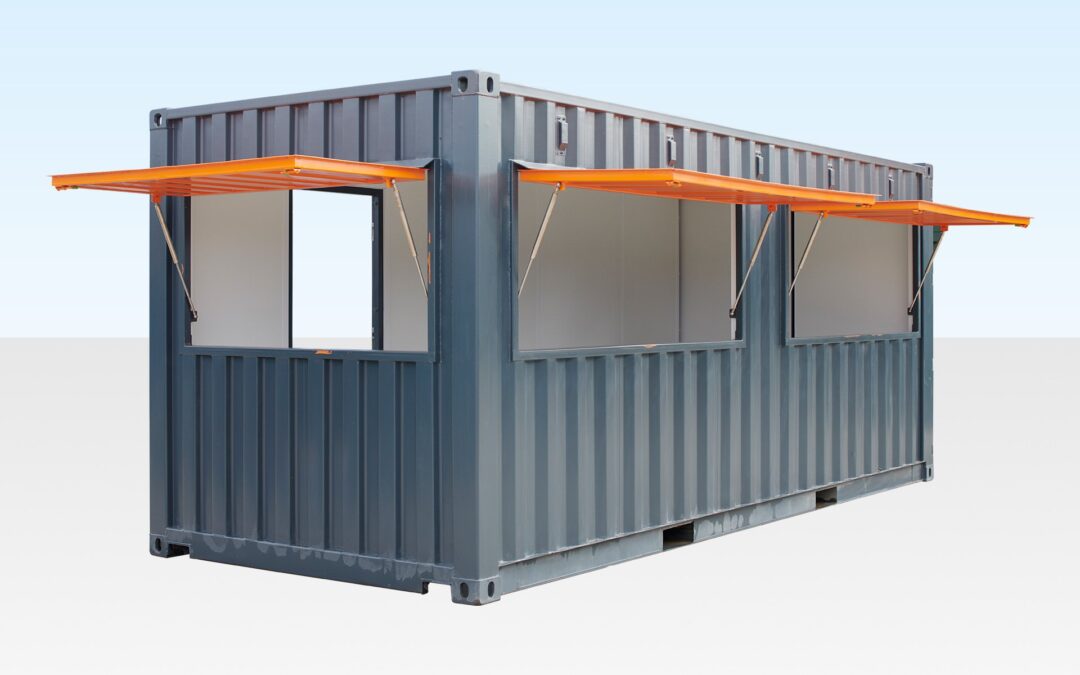
Entrepreneurs planning a compact coffee or refreshment business can start with this 20ft shipping container café for sale.
The Clad Containers unit includes a serving hatch, separate personnel door, electrical installation, insulation, and a finished interior. It is sold as a ready-to-fit café shell, allowing the buyer to choose and install the counters, sinks, coffee equipment, refrigeration, plumbing, branding, and other features required for the business.
7. Plan an Efficient Coffee Shop Layout
A small coffee shop must use space efficiently. The goal is to reduce unnecessary employee movement while keeping food preparation, handwashing, storage, cleaning, and customer service properly organized.
Begin by mapping the customer order process:
Ordering → Payment → Drink preparation → Finishing → Customer pickup
Then position equipment according to that workflow.
Your layout may need space for:
- Customer ordering window
- Point-of-sale station
- Espresso machine
- Coffee grinders
- Batch brewer
- Blender station
- Refrigerator
- Ice machine
- Display refrigerator
- Cup and lid storage
- Ingredient storage
- Handwashing sink
- Preparation sink
- Warewashing area
- Water heater
- Dry storage
- Cleaning supplies
- Waste containers
- Employee belongings
- Electrical panel
- Heating and cooling equipment
Measure every appliance before approving the interior plan. Do not rely only on website photographs or general equipment categories.
Check each manufacturer’s required clearances, power demand, water connections, drainage requirements, ventilation needs, and service access.
A poor layout can create several problems:
- Employees repeatedly crossing paths
- Slow drink preparation
- Blocked doors
- Limited storage
- Inaccessible equipment
- Overloaded electrical circuits
- Difficult cleaning
- Unsafe hot-water or cooking areas
- Crowding around the service window
Your equipment supplier, licensed contractor, and local reviewing authority should examine the proposed layout before permanent installation begins.
8. Select Equipment and Plan the Utilities
The equipment you need will depend on the menu.
A basic coffee operation may require:
- Commercial espresso machine
- Espresso grinders
- Batch coffee brewer
- Water filtration system
- Refrigerator
- Ice machine
- Blender
- Display refrigerator
- Point-of-sale system
- Cup and ingredient storage
- Handwashing sink
- Cleaning and sanitation supplies
- Waste containers
- Fire extinguisher
A business serving hot meals, baked products, sandwiches, or desserts may require additional preparation equipment, refrigeration, ventilation, sinks, storage, and fire-safety systems.
Utilities should be planned before equipment is installed.
Electrical service
Create a complete equipment schedule showing the voltage, amperage, wattage, and outlet requirements of each appliance.
Commercial espresso machines, water heaters, refrigerators, ice machines, HVAC systems, and other equipment can create significant electrical demand. A licensed electrician should determine whether the existing system is adequate.
Water and plumbing
Depending on local requirements and your menu, the shop may need:
- Potable water connection
- Handwashing sink
- Food-preparation sink
- Warewashing sink
- Water heater
- Water filtration
- Drainage system
- Wastewater connection or approved holding system
Heating, cooling and ventilation
A steel container can become uncomfortable without suitable temperature control. Heat generated by employees, refrigerators, coffee machines, water heaters, and direct sunlight must be considered.
The Clad Containers café shell does not automatically include coffee machines, refrigerators, sinks, plumbing, counters, extraction equipment, fire-suppression systems, furniture, or branding unless those items are specifically included in a written order or quotation.
This arrangement gives you control over the final fit-out and prevents you from paying for equipment that may not match your menu or local requirements.
9. Prepare the Site for Delivery and Offloading
The delivery plan should be reviewed before you purchase the container.
A suitable site generally requires a firm, level placement area with enough space for the delivery vehicle and offloading equipment.
Depending on the property and local requirements, the container may be supported by:
- Compacted gravel
- Concrete pads
- Concrete piers
- Properly positioned foundation blocks
- An engineered foundation
The final support system should keep the container level and allow its doors and service hatch to operate correctly.
Evaluate the following site conditions:
- Road width
- Gate width
- Turning space
- Overhead power lines
- Tree branches
- Soft or wet ground
- Surface slope
- Drainage
- Nearby buildings
- Fences
- Customer-access route
- Final door and service-window orientation
- Utility connection locations
- Crane or tilt-bed access
Mark the desired position and orientation before the delivery team arrives.
Clad Containers offers nationwide delivery and crane-offloading options, subject to the destination and site conditions. Delivery pricing can be affected by distance, accessibility, placement method, and offloading requirements.
Once your property has been selected, review the specifications and delivery options for the ready-to-fit 20ft container café.
10. Build Your Brand and Customer Experience
The appearance of a shipping container coffee shop can help it stand out, but branding should make the business easy to identify and understand.
Consider adding:
- Custom exterior paint
- Business logo
- Illuminated sign
- Menu board
- Service-window graphics
- Exterior lighting
- Awning or canopy
- Outdoor seating
- Planters
- Queue markers
- Customer pickup sign
- Branded cups and packaging
- Staff uniforms
- Online-ordering information
- Social-media handles
A potential customer should be able to see what you sell, where to order, where to collect the order, and how to enter or exit the service area.
The physical experience should also match your target customer.
A coffee kiosk in a business park may prioritize fast morning service and online ordering. A campground café may focus on outdoor seating and family-friendly products. A brewery coffee or food unit may use branding that complements the existing venue.
Include the business in local online directories and create an accurate Google Business Profile where eligible. Use clear photographs, correct operating hours, menu information, contact details, and directions.
11. Complete Inspections and Prepare for Opening
Before announcing an opening date, confirm that the location, container, utilities, equipment, employees, and operating procedures are ready.
Use a pre-opening checklist:
- Required permits have been approved
- Utility connections are operational
- Electrical installation has been inspected
- Plumbing is working correctly
- Equipment has been installed and tested
- Refrigeration reaches the required temperature
- Water heating is operational
- Health inspection has been completed
- Fire inspection has been completed
- Insurance coverage is active
- Point-of-sale system has been tested
- Internet connection is reliable
- Menu and prices are finalized
- Ingredient suppliers are confirmed
- Cleaning procedures are documented
- Employees have been trained
- Opening inventory has been received
- Signs are installed
- Waste collection is arranged
- Emergency contacts are available
A soft opening can help identify workflow problems before the full public launch.
Invite a limited number of customers, test the ordering process, measure service times, review product quality, monitor equipment performance, and ask employees where delays occur.
Use what you learn to adjust equipment placement, ingredient storage, staffing, menu size, and customer instructions.
Common Shipping Container Coffee Shop Mistakes
Starting with a container does not eliminate the need for careful business and site planning.
Avoid these common mistakes:
Buying before checking zoning
A container may be suitable for the business but prohibited or restricted at the proposed location.
Designing before finalizing the menu
The menu determines the equipment, storage, utilities, workflow, and permits required.
Assuming the café shell is a turnkey kitchen
A converted shell may include structural features without including appliances, plumbing, counters, sinks, or food-service equipment.
Underestimating electrical demand
Commercial coffee equipment can require more electrical capacity than expected.
Forgetting wastewater requirements
Water supply is only one part of the plumbing plan. Wastewater must also be collected and disposed of through an approved method.
Choosing equipment without measuring
Confirm appliance dimensions, door clearances, service access, and employee movement before ordering.
Ignoring delivery access
The container must physically reach the site and be placed in the required orientation.
Failing to budget for approvals
Permits, professional plans, inspections, and requested revisions may affect both the budget and schedule.
Prioritizing appearance over workflow
A visually impressive café will not operate efficiently when equipment and storage are poorly positioned.
Offering too many products
A focused menu can be easier to execute consistently in a compact workspace.
Start With a Ready-to-Fit Container Café
Understanding how to start a shipping container coffee shop begins with recognizing that the container is the foundation of the project—not the entire business.
You must still choose the concept, confirm the location, research local requirements, plan the workflow, install suitable utilities, select commercial equipment, prepare the site, complete inspections, and build a recognizable brand.
Clad Containers offers a 20ft shipping container café unit with a serving hatch, personnel access door, electrical installation, insulation, and a finished interior.
The unit is supplied as a ready-to-fit café shell. You can complete it with the counters, coffee machines, sinks, refrigeration, plumbing, ventilation, HVAC, signage, and other features that fit your menu and business plan.
Contact Clad Containers with your delivery ZIP code to confirm availability, specifications, delivery pricing, and offloading options.
Frequently Asked Questions
How much does it cost to start a shipping container coffee shop?
The total cost depends on the converted container, delivery, site preparation, permits, electrical and plumbing work, commercial coffee equipment, refrigeration, HVAC, counters, signs, initial inventory, and local requirements. Create an itemized project budget rather than relying on one general estimate.
Is a 20ft container large enough for a coffee shop?
A 20ft container can support a focused walk-up coffee, beverage, pastry, smoothie, dessert, or concession concept. Its suitability depends on the menu, equipment, number of employees, storage requirements, and required sinks or preparation areas.
Do I need a permit for a shipping container coffee shop?
Most projects require some combination of business, zoning, building, food-service, health, electrical, plumbing, fire, sign, or occupancy approvals. Requirements vary by jurisdiction, so contact the local authorities responsible for the proposed location before purchasing equipment or beginning the fit-out.
What equipment does a container coffee shop need?
Typical equipment may include an espresso machine, grinders, batch brewer, water filtration, refrigeration, ice machine, blender, point-of-sale system, sinks, water heater, storage, cleaning supplies, and fire-safety equipment. The exact list depends on the menu and local requirements.
Does the Clad Containers café include coffee equipment?
No. The unit is sold as a ready-to-fit café shell. It includes structural conversion features such as a serving hatch, personnel door, electrical installation, insulation, and finished interior. Coffee machines, sinks, plumbing, refrigeration, counters, furniture, ventilation, and branding are not included unless stated in a written quotation.
Can I customize the café after delivery?
Yes. The ready-to-fit shell allows you to choose your preferred equipment, counters, sinks, shelving, refrigeration, paint, branding, service layout, HVAC, and other additions. All work should comply with the requirements applying to your location.
Can a container coffee shop be relocated?
A container can potentially be relocated, but it must be disconnected from utilities, cleared of unsecured equipment, lifted or loaded safely, transported legally, and placed on another prepared site. Relocation costs and approvals should be considered before presenting the business as mobile.
How is a container café delivered?
Delivery methods may include tilt-bed, flatbed, or crane-assisted placement depending on the unit, destination, access, and final position. Provide the supplier with your ZIP code, site photographs, access measurements, ground conditions, and desired orientation before delivery is scheduled.